

Bookmakers offer many different ways to bet. Beyond simply betting on which side will win, they offer a wide range of markets, from the result once a…
How to Bet on Football and Other Sports: A UK Beginner's Guide

This guide explains, step by step, how to register with a bookmaker, make a deposit, bet on a match, withdraw your winnings and submit your identity documents.
It also covers a few ways to get more enjoyment out of sports betting.
What You Will Learn
- Getting started with a bookmaker follows four steps: register, deposit, bet and withdraw.
- You need three things to begin: a smartphone, a payment method and identity documents.

This article takes about 9 minutes to read.
Contents
Show
What You Need to Get Started with a Bookmaker

To get started with a bookmaker, you need the following three things.
- A smartphone, PC or tablet
- A payment method for deposits and withdrawals
- Documents for identity verification
First, you need a device with internet access, since this guide covers online bookmakers. If you are reading this page on your own smartphone or PC, you already have what you need.
A payment method for deposits and withdrawals is any way of moving money into and out of your account, such as a debit card, bank transfer or e-wallet. Note that credit cards cannot be used (see Make a Deposit below). Fees and processing times vary by method.
Finally, bookmakers licensed by the Gambling Commission must verify your identity before you can deposit or bet, and they may ask for further documents later, for example before your first withdrawal, so you should have them ready. If you plan to use a bookmaker over the long term, preparing all three before you move on to the next step will make the process smoother.
Register with a Bookmaker
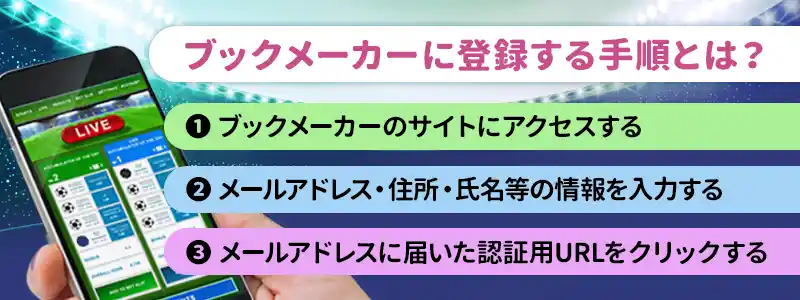
To bet on sports, you first need to open an account with a bookmaker. You must be 18 or over to register. Choose a bookmaker licensed by the Gambling Commission; you can check any business on the Commission’s public register of licensed businesses.
Signing up is much the same as creating an account on an online shopping site, and if you have done that before, it takes only a few minutes. The registration steps are as follows.
- Go to the bookmaker’s website
- Enter the required information, such as your email address, home address, full name, date of birth and phone number
- Click the confirmation link sent to the email address you entered
Make a Deposit
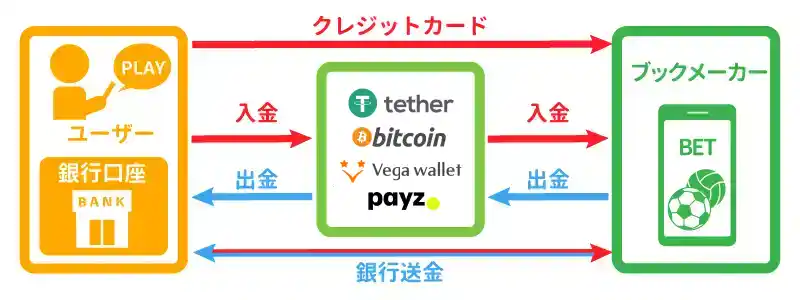
Once your registration is complete, the next step is to make a deposit. The deposit process is broadly the same on every site.
- Tap the “Deposit” button on the home page or on your wallet page
- Choose a payment method
- Enter the deposit amount and your payment service login details or account number
- Tap the “Deposit” or “Confirm” button
- The deposit is complete once the funds appear in your wallet balance
Payment methods vary by bookmaker, but debit cards, bank transfers and e-wallets are common.
Credit cards cannot be used to gamble with bookmakers licensed by the Gambling Commission (since 14 April 2020), and this includes e-wallet payments funded by a credit card. A bank transfer works well if you want to use one method for both deposits and withdrawals, and an e-wallet is a good option if you want to keep fees down.
Set Deposit Limits Before You Start
Before you make your first deposit, decide how much money you can afford to lose. Treat that amount as the cost of your entertainment, not as money you expect to get back. If your account offers deposit limit and time-reminder tools, set them up before you place your first bet.
When you reach your limit, stop. Do not deposit more to win back what you have lost, and come back another day only if betting is still fun.
How Much Money Do You Need to Start with a Bookmaker?
If you are betting for fun, you do not need a large amount of money. You might bet on the team you support, or on an unfamiliar sport, and simply enjoy watching the match. As a guideline, a first deposit of around £30–50 is a good place to start.
If you want to keep playing over a longer period, though, a larger bankroll helps. Your balance rises and falls with each match, and a few losses in a row can use up your funds. With around £100, it is easier to keep betting through a losing streak. In either case, deposit only an amount you can afford to lose.
How to Bet on Sports: From Choosing a Match to Placing a Bet
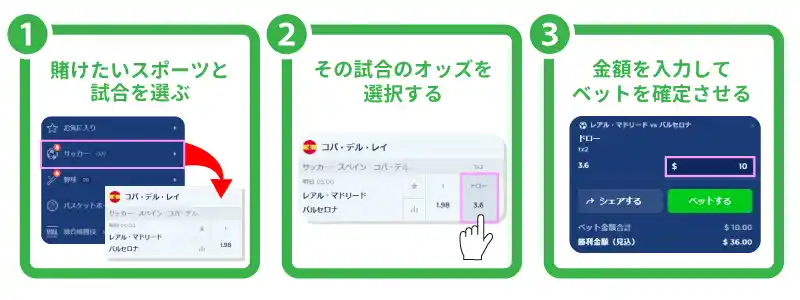
Once you have made a deposit, you can place your first bet on a sporting event.
The selection depends on the bookmaker, but dozens of sports are usually available, including football, horse racing, tennis, cricket, rugby and esports. You can bet on a wide range of competitions, such as the Premier League, the Champions League and the Six Nations.
Bookmakers also cover many other domestic leagues and cups. During major international events such as the World Cup and the Olympics, you can bet on those matches and events as well.
- Choose a sport
- Choose the match you want to bet on
- Choose a bet type
- Enter your stake
- Tap the “Place Bet” button to finish
Bookmakers offer many bet types, such as handicaps and over/under bets. If you are betting for the first time, the easiest to understand is the match result (1X2) bet, in which you choose between a home win, a draw and an away win.
- Related Article
-

What Are Bookmaker Odds?

If you have bet on horse racing, the idea may already be familiar: bookmakers set a price for each outcome, called the odds. The odds show the payout on a winning bet, and they are set lower for outcomes that are considered more likely, so the less likely a bet is thought to win, the higher its odds and the larger its payout.
In the UK, odds are usually shown as fractions. At 5/1, a £10 bet wins £50 profit and returns £60 including your stake; evens (1/1) doubles your money. The same prices in decimal odds are 6.00 and 2.00: multiply your stake by the decimal odds to get the total return. Some sites also show American odds, where 5/1 (6.00) appears as +500.
Sports betting odds are set in advance by the bookmaker and then move in response to betting activity. The odds also have the bookmaker’s cut built in. If you convert each outcome’s decimal odds to a probability (1 divided by the odds) and add them up, the total will add up to slightly more than 100%; this excess is known as the overround. Dividing 100% by that total gives the payout percentage (the share of all stakes paid back to customers), and the rest is the bookmaker’s margin. As with any form of gambling, betting at random will therefore lose money over the long run.
This is fixed-odds betting. The main difference from pool betting, such as the Tote on horse racing, is that the odds are fixed the moment you place your bet.
With the Tote, the odds change with the amounts staked and become final only when betting closes. At a bookmaker, you are paid at the odds you took, even if they move afterwards. Being able to choose when to bet and which odds to take is a defining feature of bookmakers. Fixed odds do not, however, give you an edge in themselves.
Make a Withdrawal
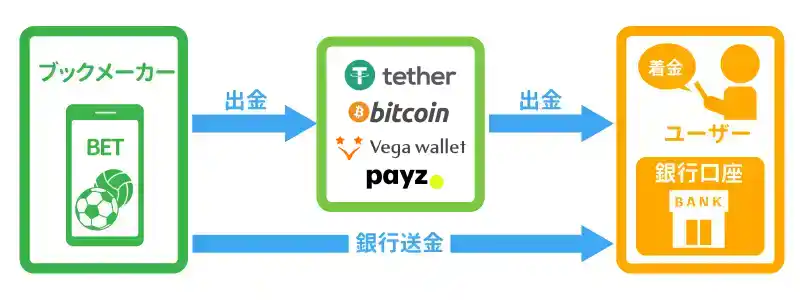
Once you have won money betting on sports, the last step is to withdraw it from the bookmaker to your bank account or another payment method. As with deposits, the process is broadly the same on every site.
- Tap the “Withdraw” or “Withdrawal” button on the home page or on your wallet page
- Choose a withdrawal method
- Enter the withdrawal amount
- Tap the “Withdraw” or “Request Withdrawal” button
- The withdrawal is complete once you receive a confirmation email from your payment service
You cannot choose any withdrawal method you like. As a rule, you must withdraw using the same method you used to deposit; using different methods for deposits and withdrawals may be flagged as possible money laundering. If you deposited by bank transfer, for example, you also withdraw by bank transfer.
Identity Verification (KYC) and Your First Withdrawal
Bookmakers licensed by the Gambling Commission must verify your identity, a process known as KYC (know your customer), before you can deposit or place a bet; some may ask for further documents later, for example before your first withdrawal. Verification confirms that the details you entered when you registered, such as your name and address, are correct. If documents are requested, you upload photos of your ID and proof of address to the bookmaker.
The documents usually required are listed below, although some bookmakers ask for different ones.
- Proof of identity: a passport or driving licence (or a national identity card if your country issues one)
- Proof of address: a recent utility bill or bank statement
- Payment documents: a screenshot showing your bank account details, a photo of your debit card or a screenshot of your e-wallet account
If a bookmaker asks for further documents, you cannot withdraw until the checks are complete.
Three Ways to Get More Out of Sports Betting

Betting on your favourite team and cheering it on is enjoyable enough, but sports betting offers many other ways to play.
Use Prediction and Analysis Sites When Choosing Matches
For every major sports league there are many websites, not just those run by bookmakers, that analyse and predict match results.
Popular professional competitions, such as the Premier League, Serie A and the Bundesliga in football, and the County Championship in cricket, are covered by many analysis sites. These sites are useful for gathering information, but the track records they publish cannot be independently verified. Treat them as only one factor in your decision, and be cautious with paid tipster services.
If you are confident in your analysis of a sport, you can try other bet types beyond simply picking the winner, such as handicap bets or correct-score bets. As explained above, bets that are less likely to win have higher odds, but that does not give you an edge.
Try Betting on a Different Sport Now and Then
Besides professional leagues in popular sports such as football, cricket and rugby, bookmakers let you bet on individual sports such as tennis and golf, indoor games such as darts and snooker, less widely followed sports such as handball and squash, and esports.
Some bookmakers also have a “Specials” category with bets on events outside sports (novelty bets), such as who will win Strictly Come Dancing or which party will win the next UK general election.
Following the same league is enjoyable, but we also recommend betting on a different sport from time to time. Try a small bet on an unfamiliar sport, then watch the match. You may discover what makes that sport appealing and gain another fixture to look forward to.
Watch Big Events and Set Limits
Big events such as the World Cup, the Euros, Wimbledon and the Grand National bring more matches, races and markets to bet on. It can be tempting to bet more often, or to try an accumulator (acca) that combines several selections in one bet, but every selection in an acca must win, and the bookmaker’s margin applies to each one.
Enjoy the atmosphere of these events, but set a budget and a time limit before they start, and stick to them however many matches are on.
Summary: Register, Deposit, Bet and Withdraw in Four Steps
Getting started with a bookmaker is simple. Choose a bookmaker licensed by the Gambling Commission after comparing the sports and markets it offers, then register (you must be 18 or over).
Next, make a deposit, choose the sport and match you want to bet on, and place your bet. If your bet wins, you can withdraw your winnings, although the bookmaker may ask for further identity documents first.
Enjoy sports betting in whatever way suits you, whether it adds to the excitement of watching a match or gives you a way to use your in-depth knowledge of a sport.
If gambling stops being fun, GAMSTOP and the National Gambling Helpline (0808 8020 133) can help.
Beginner's Guide to Bookmakers
Types of Casino GamesThis site is intended for people who live in countries and regions where online casinos and gambling are legal.
Use of this site is subject to our Disclaimer.
If you live in a country or region where online casinos are illegal, you may not use this site.