

Some blackjack tables offer side bets alongside the main bet, the contest between the player and the dealer. Side bets offer high payouts that the…
Blackjack Hands: 10 Special Hands and Side Bets Explained

Blackjack offers side bets in addition to the standard main bet. Some games also have their own special rules.
Side bets are available at many live tables. Special rules that add their own winning hands are found only in certain games. In both cases, making one of these hands earns a payout, so learning them before you play gives you a wider choice of tables.
What You Will Learn
- There are 10 hands that can pay on the main bet, but in standard blackjack only the natural blackjack is special; the others depend on table rules or the variant. The best is a natural blackjack, which pays 3 to 2: a $10 bet wins $15.
- Side bets and special rules let you bet on additional hands.
- These hands rarely occur, so take care not to bust by chasing them.

This article takes about 9 minutes to read.
Contents
Show
Does Blackjack Have Special Hands?
The only widely known special hand in blackjack is the natural blackjack, made when the first two cards are an ace and a 10-value card (10, J, Q or K).
Most blackjack games have no other special hands. However, some tables and game variants add hands of their own as special rules.
When one of these hands is made, it may count as a win even though it would lose under the standard rules, or it may earn a payout regardless of whether the hand wins or loses.
Special Hands Exist Only in Certain Games with Different Rules
In standard blackjack, the natural blackjack is the only special hand on the main bet. The other hands on this page pay only at tables or variants with special rules, and side bets, which are additional wagers explained in detail later in this article, have hands of their own.
Played according to basic strategy, blackjack has a theoretical return to player (RTP) of around 99.5%, among the highest of any casino game. Adding payouts for special hands on top of that would make it hard for the casino to maintain its house edge. For this reason, most blackjack games recognize no hand other than the natural blackjack.
That is also why blackjack games that do offer special hands often use rules that differ from the standard game. Spanish 21, for example, is played with 48-card decks from which the four 10s have been removed, so check the rules carefully.
Types of Blackjack Hands
Which hands are offered depends on the game, so always check the pay table before you play. For all of these hands, the order in which the cards are dealt does not matter.
- Natural Blackjack
- Queen-Jack
- Eleven-Card Hand
- Seven-Card 21
- Seven Cards Without Busting
- Six-Card 21
- Six Cards Without Busting
- Three Sevens
- 6-7-8
- Ace to Six
Natural Blackjack
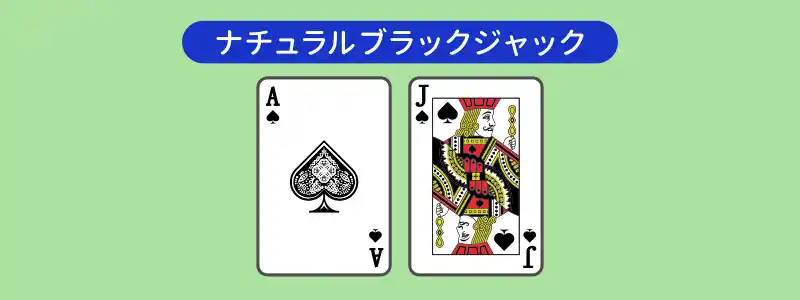
A natural blackjack is a hand in which the first two cards dealt are an ace and a 10-value card, for a total of 21. Suits do not matter. It is the best hand in blackjack and beats a 21 made by drawing additional cards. The standard payout is 3 to 2, so a $10 bet wins $15, although some tables pay only 6 to 5, in which case a $10 bet wins $12.
Some tables also have special rules that pay a bonus for particular suit combinations, such as the ace of spades with a black jack (the jack of spades or the jack of clubs). The name “blackjack” itself is said to come from this black jack combination, although there are several theories about its origin.
Queen-Jack
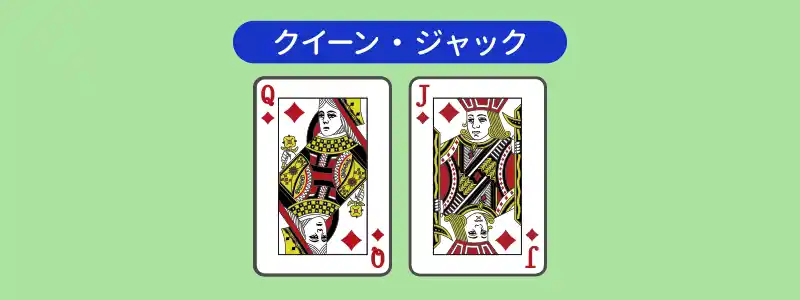
A Queen-Jack is a queen and a jack of the same suit. The hand totals only 20, but tables that recognize it pay a bonus on it.
Eleven-Card Hand
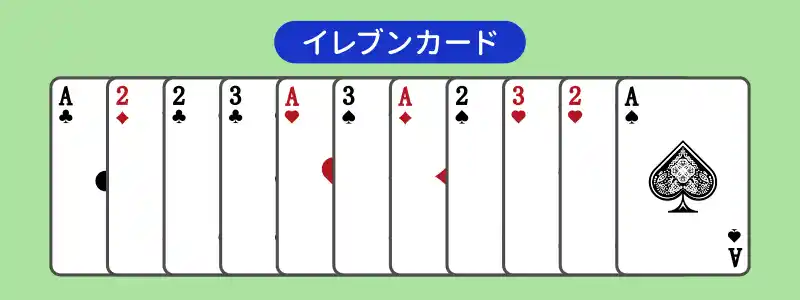
An eleven-card hand is made when you hold 11 or more cards without busting. Unlike seven-card 21 and six-card 21 (described below), which require a total of exactly 21, this hand depends only on the number of cards, so any total up to 21 qualifies. The same applies to the seven-card and six-card hands without busting. Drawing 11 or more cards while staying at 21 or less is extremely difficult, however, and this hand is very rarely made in practice.
Seven-Card 21
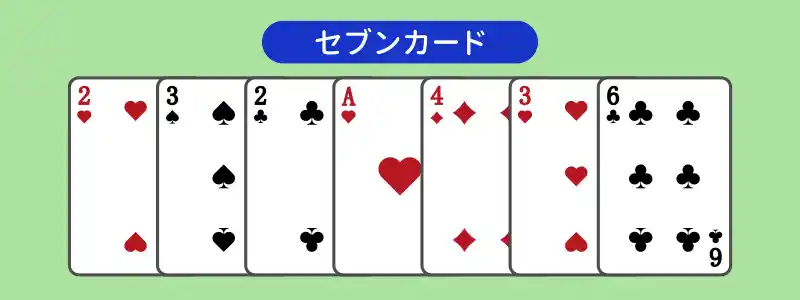
A seven-card 21 is a hand of seven cards that totals exactly 21. Any other total does not qualify.
Seven Cards Without Busting
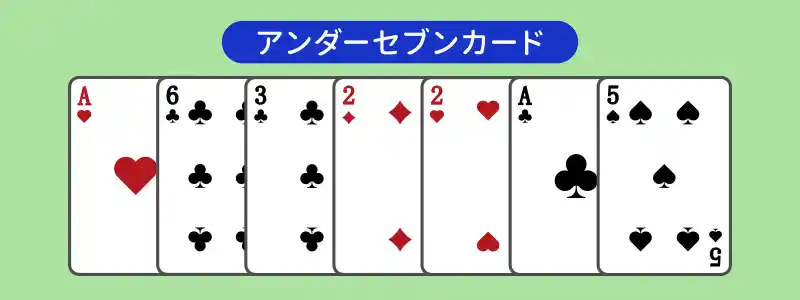
You make this hand by reaching seven cards without busting. The total can be any number up to 21.
In addition to paying bonuses for certain hands, some tables use a rule called Seven Card Charlie. Under this rule, a player who draws seven cards without busting wins automatically, without comparing totals with the dealer. Whether this rule or a dealer blackjack takes precedence depends on the game.
Six-Card 21
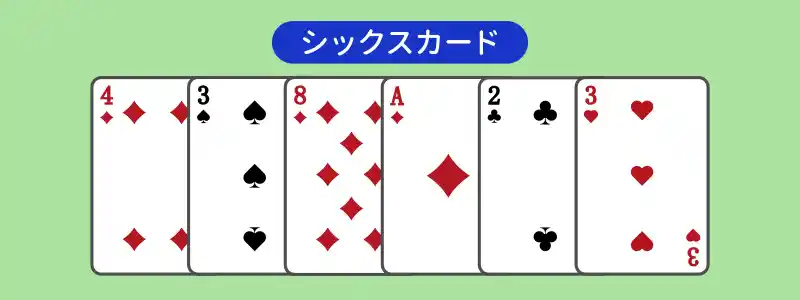
A six-card 21 is a hand of six cards that totals exactly 21. Any other total does not qualify.
Six Cards Without Busting
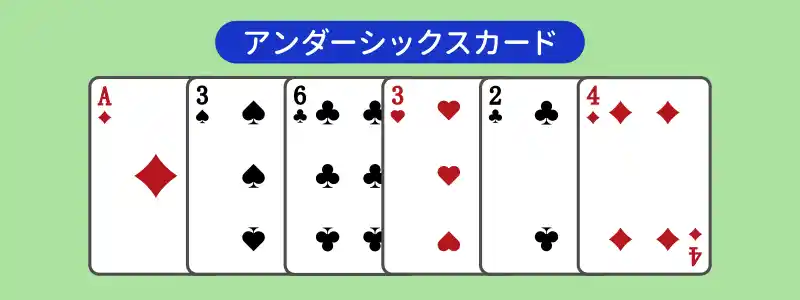
You make this hand by reaching six cards without busting. The total can be any number up to 21.
Some tables also use Six Card Charlie, the six-card version of the rule. It works the same way as Seven Card Charlie; only the number of cards differs. Whether it or a dealer blackjack takes precedence also depends on the game, so check the rules shown at the table before you play.
Three Sevens
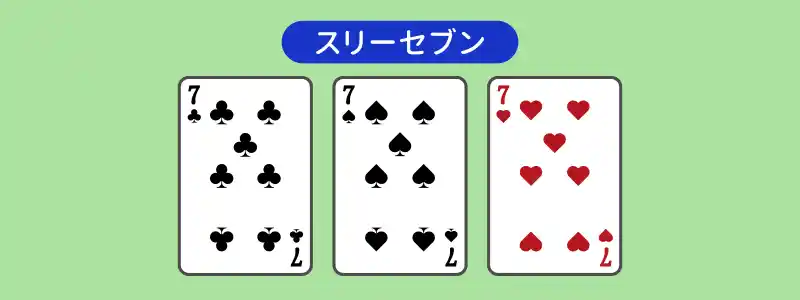
Three Sevens is a hand of three cards that are all 7s, for a total of 21.
6-7-8
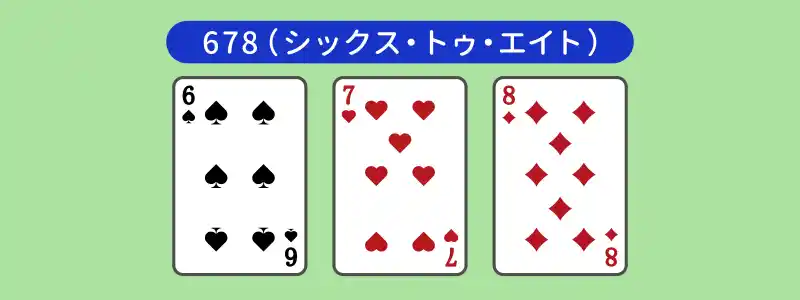
A 6-7-8 is a hand of three cards consisting of a 6, a 7 and an 8, for a total of 21.
Ace to Six
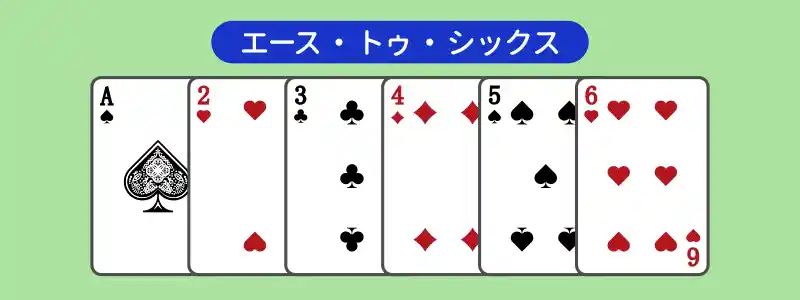
Ace to Six is a hand of six cards made up of the consecutive ranks A, 2, 3, 4, 5 and 6, for a total of 21.
Side Bets That Pay Regardless of the Hand’s Outcome
Many blackjack tables offer side bets. A side bet is an additional wager placed separately from the main bet. If a specific combination of cards appears, the side bet pays out whether the main hand wins or loses.
Side bets generally have a higher house edge than the main bet. Their payouts are larger when they win, but if you keep betting on them, your losses tend to grow.
Two common examples are Perfect Pairs, which wins when your first two cards form a pair, and 21+3, which uses your two cards and the dealer’s upcard to make a three-card poker hand.
- Related Article
-
21+3
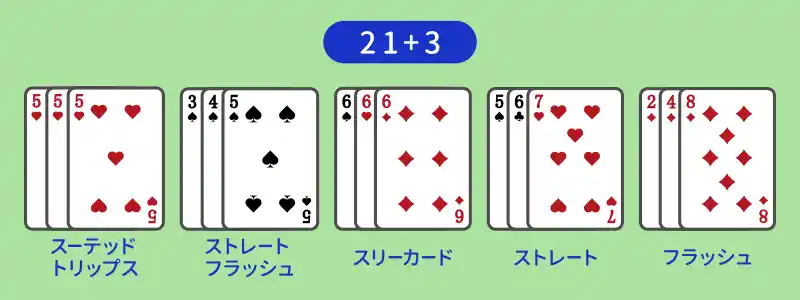
21+3 is a side bet that combines your two cards with the dealer’s upcard (the dealer’s face-up first card). It pays if these three cards make a three-card poker hand.
Five hands can win on 21+3. If a combination qualifies for more than one of them, it is paid as the higher-ranking hand.
- Suited trips (three cards of the same rank and the same suit)
- Straight flush (three consecutive ranks of the same suit)
- Three of a kind (three cards of the same rank in different suits)
- Straight (three consecutive ranks in mixed suits)
- Flush (three cards of the same suit)
Perfect Pairs
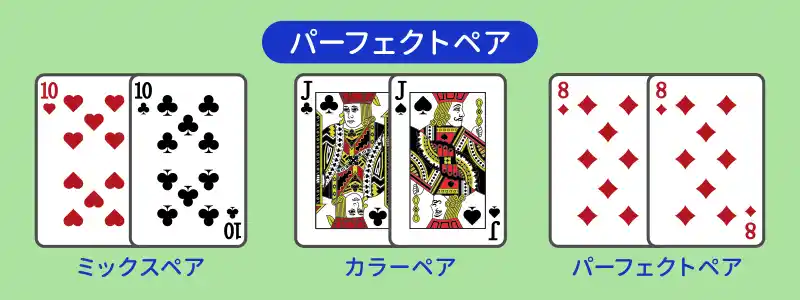
Perfect Pairs is another side bet. It pays if your first two cards form a pair.
Perfect Pairs has three winning hands: a mixed pair (a pair in suits of different colors), a colored pair (a pair in two different suits of the same color) and a perfect pair (a pair in the same suit). The third shares its name with the side bet itself, but as a hand it refers only to a pair of the same suit.
Any Pair
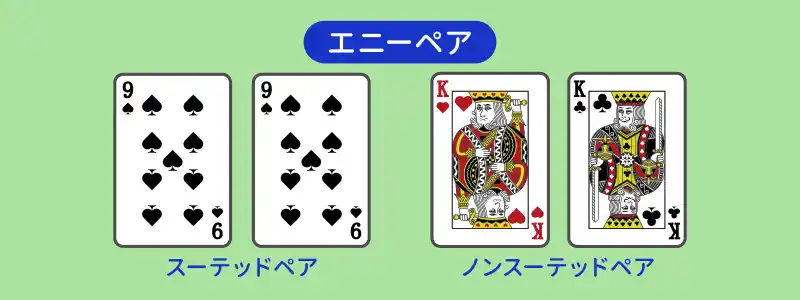
Like Perfect Pairs, Any Pair is a side bet that pays when your first two cards form a pair. In its basic form, any two cards of the same rank qualify, and the suits do not need to match.
Payouts vary by provider. In the version of Any Pair offered by Evolution (a live casino provider), a suited pair (same suit) and an unsuited pair (different suits) are separate hands with different payouts. Always check the pay table at each table for the actual payouts.
What to Keep in Mind When Going for Special Hands
Played according to basic strategy, blackjack has one of the highest theoretical RTPs of any casino game. That RTP is a long-term theoretical figure and does not guarantee short-term results. Special hands are only an extra on top of the main game.
Blackjack Is Still a Game of Beating the Dealer
The ways to win in blackjack are simple: either you finish with a higher total than the dealer without going over 21, or the dealer busts.
Beginners tend to focus on getting as close to 21 as possible. Strictly speaking, though, even a low total wins as long as it beats the dealer’s.
Most special hands in blackjack can only be made by drawing many cards. When the dealer’s upcard is a weak 2–6, standing rather than drawing for the special hand will usually keep your losses lower. We recommend following basic strategy first.
Special Hands Are Rarely Made, So Do Not Fixate on Them
Side bets aside, the probability of making a special hand on the main bet is extremely low. Hands such as six-card 21 and seven-card 21 require many cards, so you will almost always reach a point where you should stand before the hand is complete.
To draw six or seven cards and still stay at 21 or less, you need a run of low cards. A single 10-value card along the way pushes the total up sharply, so these hands are made only very rarely.
Because these hands are difficult to make, some games pay well for them. The probability is low, though, so if you keep deviating from basic strategy to chase them, your losses will tend to grow.
Frequently Asked Questions About Blackjack Hands and Payouts
- What is the best hand in blackjack?
-
The best hand in blackjack is the natural blackjack, also called a natural 21. It is a hand in which the first two cards dealt are an ace and a 10-value card, for a total of 21, and it beats a 21 made by drawing additional cards. It usually pays 3 to 2, so a $10 bet wins $15, although the payout can vary by casino and game.
If the dealer also has a blackjack, the hand is a push.
- How many special hands are there in blackjack?
-
Blackjack has fewer special hands than other card games. Besides the natural blackjack, which is the best hand, they include Queen-Jack, seven-card 21 and Three Sevens. Which hands can be made depends on the casino and the blackjack variant you play. This page covers 10 hands that can pay on the main bet at some tables or variants; side bets also have hands of their own.
- What is the highest payout in blackjack?
-
On the main bet, the highest payout is 3 to 2 for a standard blackjack (natural 21), so a $10 bet wins $15.
Side bets can pay around 100 to 1 for specific card combinations or matching suits, so a $10 bet wins about $1,000 (payouts vary by game). Side bets generally have a higher house edge than the main bet, however, so if you keep placing them in pursuit of these payouts, your losses tend to grow.
Summary: Special Hands Are a Bonus, Beating the Dealer Is the Game
Blackjack is one of the most popular table games at online casinos, and some tables offer large payouts for specific hands. Tables that pay for special hands, however, usually offset those payouts with other rules. When you choose a table, look at its full set of rules, not just whether it offers special hands.
These hands are also hard to make, and in some cases you would have to deviate from basic strategy to try for them.
If you want to enjoy blackjack over the long term, do not chase special hands. Keep in mind that the game is a contest between your hand and the dealer’s.
We recommend playing according to basic strategy and treating special hands as a bonus when they happen, not as a goal.
This site is for adults of legal gambling age (18+, or older where required) who live in countries or regions where online gambling is legal.
Use of this site is subject to our Terms and Conditions.
Gambling involves risk. Only bet what you can afford to lose, and do not use online gambling services where they are illegal.

Bell | Editor of Online Casino Winners Club. Since the site launched in 2003, Bell has written guides to casino game rules, tested betting systems and covered land-based casinos around the world, and still plays the games before writing about them. Bell's core advice: choose the bets with the lowest house edge, and decide in advance how much you are prepared to lose.